Understanding Hair and Body Hair Characteristics in Down Syndrome
Down syndrome, or Trisomy 21, is a genetic condition that manifests through a variety of physical characteristics. While the primary focus should always be on the individual’s health, development, and well-being, understanding common physical traits can help demystify the topic and provide clear information for families and caregivers.
Among these characteristics, particularities related to hair and body hair are frequently observed. This article explores what science and clinical observation tell us on the subject.
Common Hair Characteristics in Trisomy 21
Dermatological studies and observations over decades have identified some common trends regarding hair and body hair in people with Down syndrome. It is important to note that these are generalizations, and individual variation is significant.
Scalp Hair
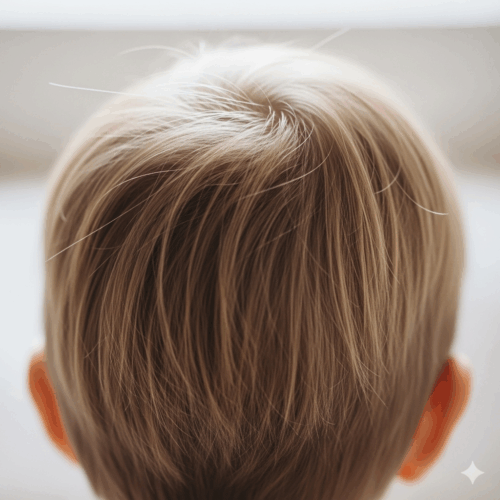
The hair is often described as being particularly fine, straight, and soft to the touch. Additionally, hair density may be lower, resulting in sparser or thinner-looking hair.
Body and Facial Hair
The tendency for finer and scarcer hair generally extends to body hair. This can be observed in eyebrows and eyelashes, which may be less dense, as well as in hair on other areas of the body, such as the arms and legs.
Associated Conditions: Alopecia Areata
Medical literature indicates that individuals with Down syndrome have a higher prevalence of Alopecia Areata compared to the general population. This is an autoimmune condition that leads to hair loss in localized, rounded patches. A consultation with a pediatrician or dermatologist is recommended if signs of the condition appear.
The Genetic Basis of the Characteristics
The explanation for these characteristics is purely genetic. The presence of the extra chromosome 21 influences the expression of various genes that play a role in the development of different body tissues, including the hair follicles—the structures in the skin responsible for producing hair. This genetic influence can result in follicles that produce finer or fewer strands of hair.
The Importance of Individuality
It is crucial to emphasize that while these are common trends, individual variation is immense. A person’s characteristics are largely inherited from their parents. Therefore, many individuals with Trisomy 21 will have hair patterns very similar to those of their family.
Understanding these particularities helps to form a more complete picture, but the focus must always remain on the person as a whole, valuing their potential, health, and unique identity, which transcends any single physical trait.